Waking up beside the coast is a lovely reason to make this more than a day trip. The important bit happens before you pack: choose a place you can actually reach, then match the nights, tides and transport. A beautiful bay on a map isn’t automatically a workable overnight stop.
Tent or hut? Start with how you want to travel
A campsite gives you a reserved place to pitch your own tent. A hut gives you a shared bunk space rather than a private room. Both need advance bookings on the Coast Track. Start with the DOC Coast Track accommodation listings to see current options, facilities and alerts.
For a kayak-and-walk trip, decide when the kayak journey ends and the walking begins. Camping gear, wet equipment and overnight bags all need a plan. Before paying for a chain of nights, talk through the route and any collection or transport arrangements with the crew.
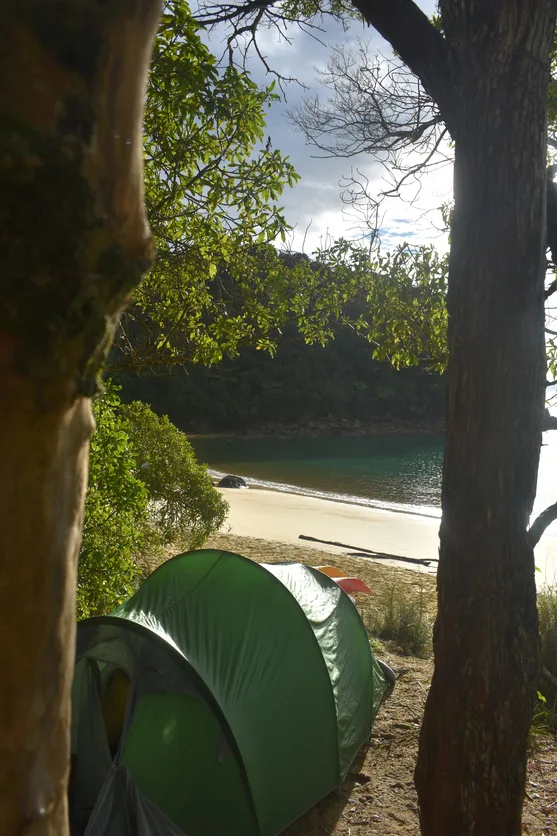 A tent beside the Abel Tasman coast. Reserve a designated campsite before your trip.
Smaller bays: Akersten & Te Pukatea
Akersten Bay is a beachside stop on the southern Tinline–Anchorage stretch, reached on foot or by boat rather than by road. It suits the idea of a smaller coastal camp, provided the route and available space suit your group. A small campsite does not guarantee you’ll have the bay to yourself.
Te Pukatea Bay is another small beachside option near Anchorage. Walkers reach it via the track through Anchorage and return the same way to continue on the main route. Allow for that side trip rather than assuming your tent is right beside the through-track.
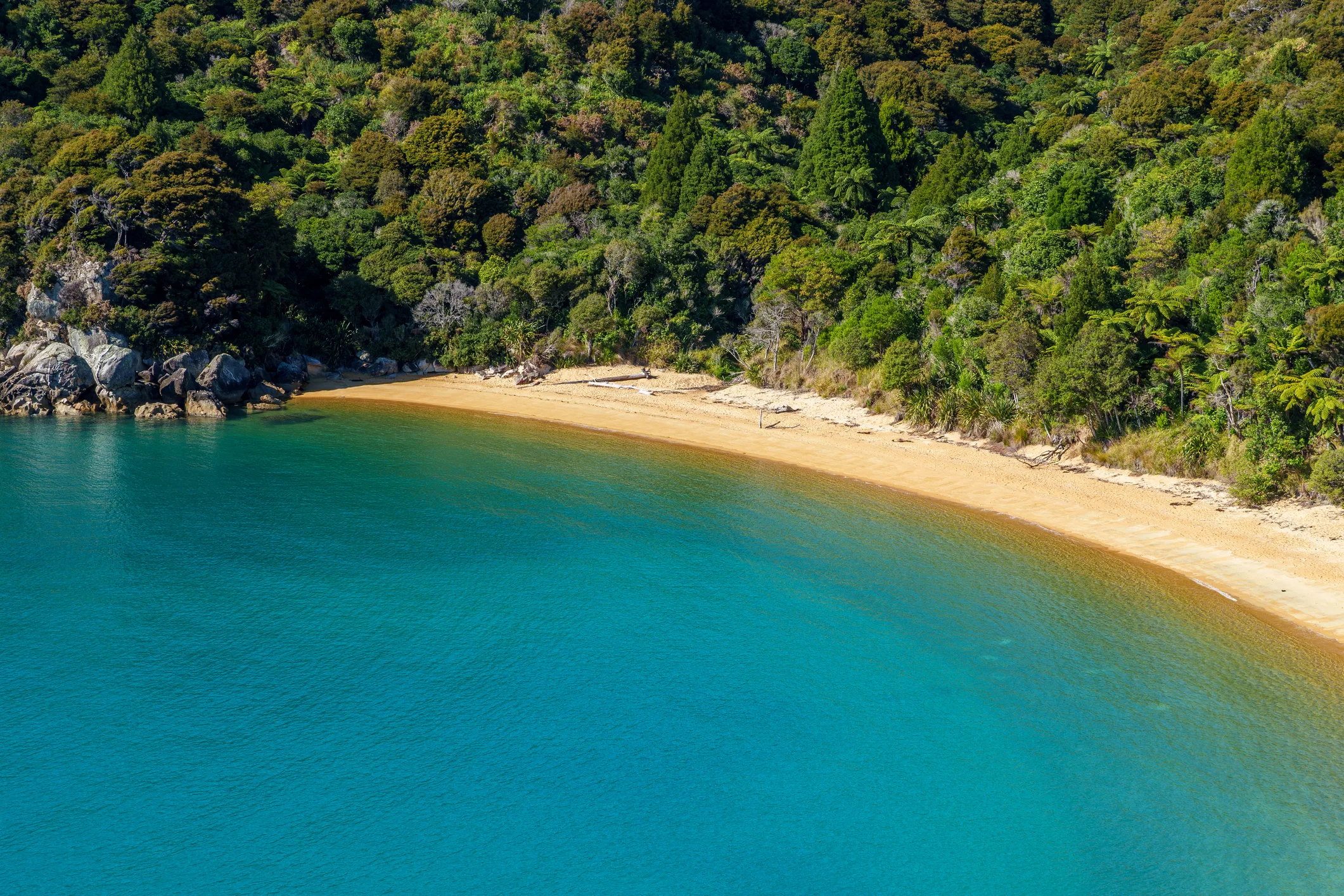 Te Pukatea Bay. Check the DOC listing for the campsite’s current facilities and availability.
Anchorage & Bark Bay: useful coastal bases
Anchorage has both hut and camping accommodation, so it is worth considering when some of your group would rather sleep under a roof. Confirm you have reserved the right type: a tent reservation and a hut bunk are separate choices. Read the Anchorage Hut listing for what to bring and access information.
Bark Bay campsite is reached on foot or by boat and is a scheduled water-taxi stop. DOC notes it can be popular with school groups on some term-time weekdays. If quiet is high on your wish list, check the listing’s advice before choosing your dates; a bigger camping area can have a sociable feel.
Mosquito Bay: sort the boat first
Mosquito Bay is the option that needs particular care. There is no walking track in from the Coast Track and no water-taxi service. DOC says not to book until you have arranged private boat access. A kayak can provide that access only when the route, conditions and hire arrangements work.
Don’t add it to a walking itinerary because the map makes it look close to Bark Bay. Nor should it be your fallback if you expect a water taxi to collect you there. Confirm the whole journey, including leaving the bay, before reserving your night.
Onetahuti & the northern coast
Onetahuti Bay is a walk-in or boat-in campsite and scheduled water-taxi stop. For Kahu freedom trips it is the northernmost overnight camping choice while you are travelling with the kayak. Our paddling limit is Shag Harbour; don’t extend the kayak itinerary north simply because another campsite is available.
Awaroa, Tōtaranui, Mutton Cove and Whariwharangi belong to a different stage of the journey for Kahu visitors, reached through an agreed walking or transport connection. Tōtaranui campground has road access through Golden Bay. Its main campground and the separate Coast Track Great Walk campsite are different booking options: choose the listing that matches your trip.
Four Coast Track huts, one shared approach
The four Coast Track huts are Anchorage, Bark Bay, Awaroa and Whariwharangi. The last is a historic homestead, giving the northern end a different character. Huts are communal accommodation; bring consideration for other sleepers as well as your own overnight kit.
Bring your sleeping bag, food, cooking equipment, stove and fuel, plus a headtorch. Do not assume hut accommodation includes meals, gas cookers or lighting. Read the specific hut listing and current notices before you go. Campers should not assume their reservation gives them use of hut facilities.
Pack for the campsite you booked
- Carry drinking water for the journey and a way to treat further water. Check the supply and any treatment notices for each overnight stop.
- Use waterproof bags for sleeping gear and warm clothes. Pack a rain layer and sun protection even when the departure forecast looks fine.
- Bring your own food and cooking kit; check current fire restrictions rather than relying on a fireplace being available.
- Take rubbish and food scraps out with you. Use toilets, protect vegetation and keep food secure from wildlife.
Book the nights, then keep the plan together
Our camp-pass booking guide explains how to reserve named campsites or hut spaces and keep the confirmation. Your DOC stay, kayak hire and any transport are separate arrangements. Check them together before committing to the itinerary.
If you need a bed and a shower before or after the park, see Where to Stay. If you’re deciding which bay feels right, our beaches, bays and islands guide adds the landscape to the logistics.
Researched 20 October 2026 from the linked DOC track, campsite and hut pages. Access, booking rules and facilities may change; read current alerts and each listing before reserving. Kahu’s kayak boundary comes from our existing freedom-hire guidance. No availability, campsite capacity or transport connection is guaranteed here.