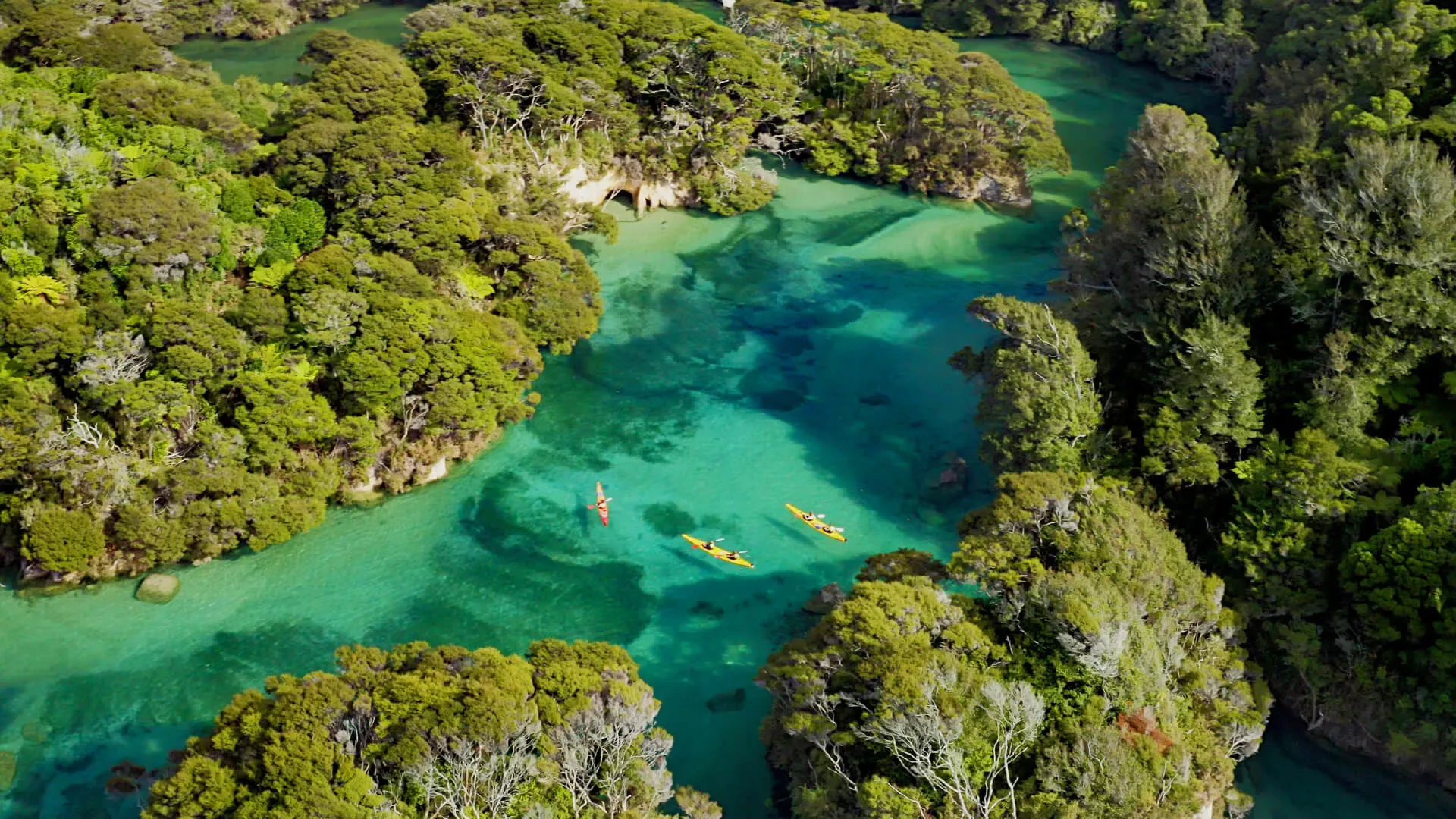
Tucked between Tasman Bay / Te Tai-o-Aorere and Golden Bay / Mohua at the top of the South Island, Abel Tasman is New Zealand’s smallest national park, and one of its best loved. It’s a coast of golden beaches, granite headlands and clear water, with native forest running right down to the sand. It’s also our home, and we think it’s one of the most beautiful places anywhere to spend a day on the water.
At 22,530 hectares, the park is small enough to get to know, but there’s plenty to discover: the 60 km Coast Track, islands where fur seals bask on warm rocks, a marine reserve, sandy estuaries that empty and fill with the tide, and a different beach for every day of the week. Here’s the story of the place, and how to make the most of it.
Granite, gold and green
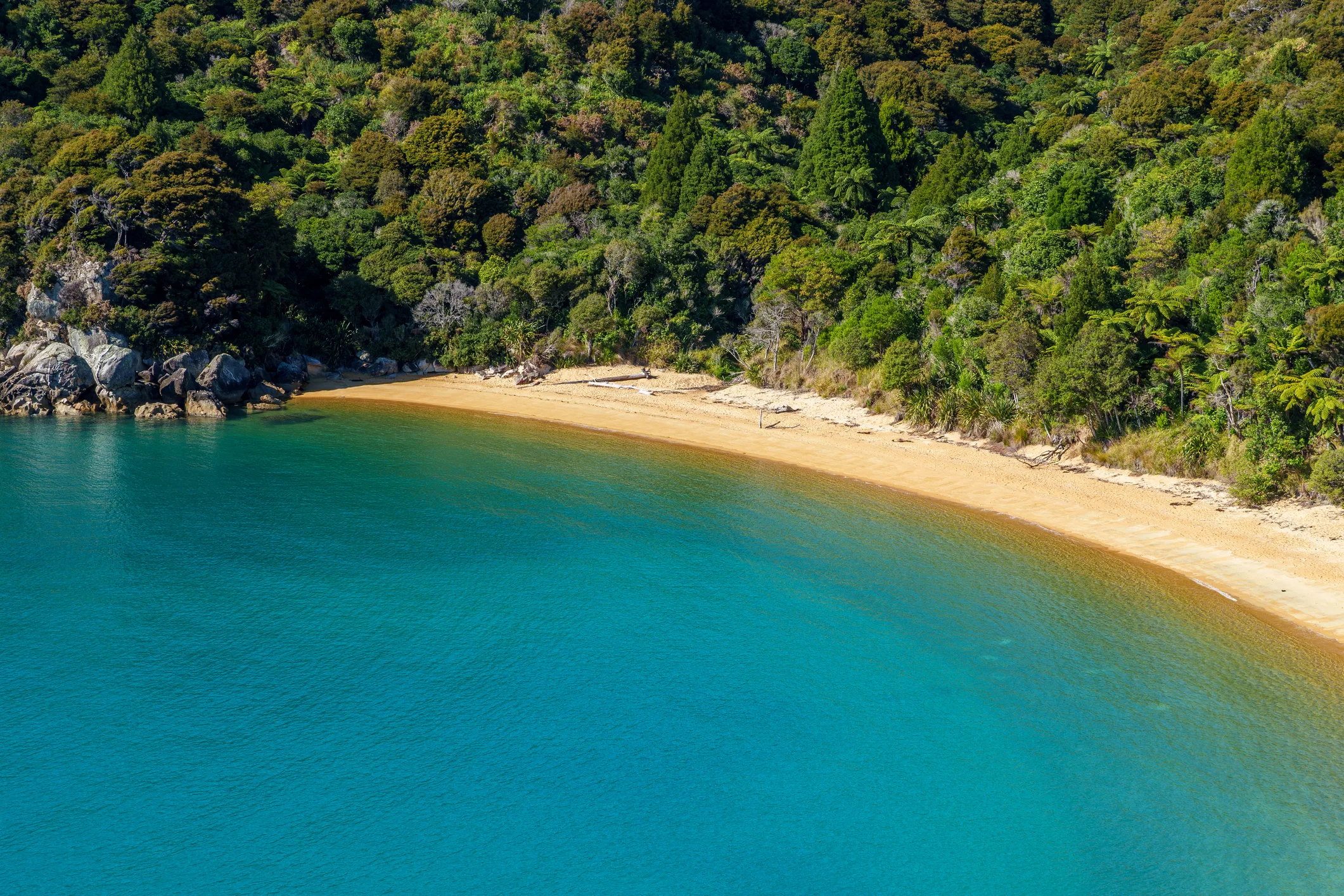
The park is built on Separation Point Granite, a rock that formed more than 100 million years ago. As it weathers, the granite breaks down into the coarse golden sand the Abel Tasman is famous for, and shapes the smooth boulders and rounded headlands you’ll paddle past.
Those granite soils are low in nutrients, which shapes the forest too. Black beech grows on the dry ridges and hard beech further inland, while kānuka and mānuka cover land that was once burned or cleared. Much of the coast was logged, burned or farmed over the last 150 years, so a lot of the green you see today is forest growing back.
Behind many beaches sit sandy estuaries, such as Torrent Bay, Bark Bay and Awaroa, that drain and fill with every tide. They’re among the least modified estuaries in the region, and a big part of what makes this coast so special.
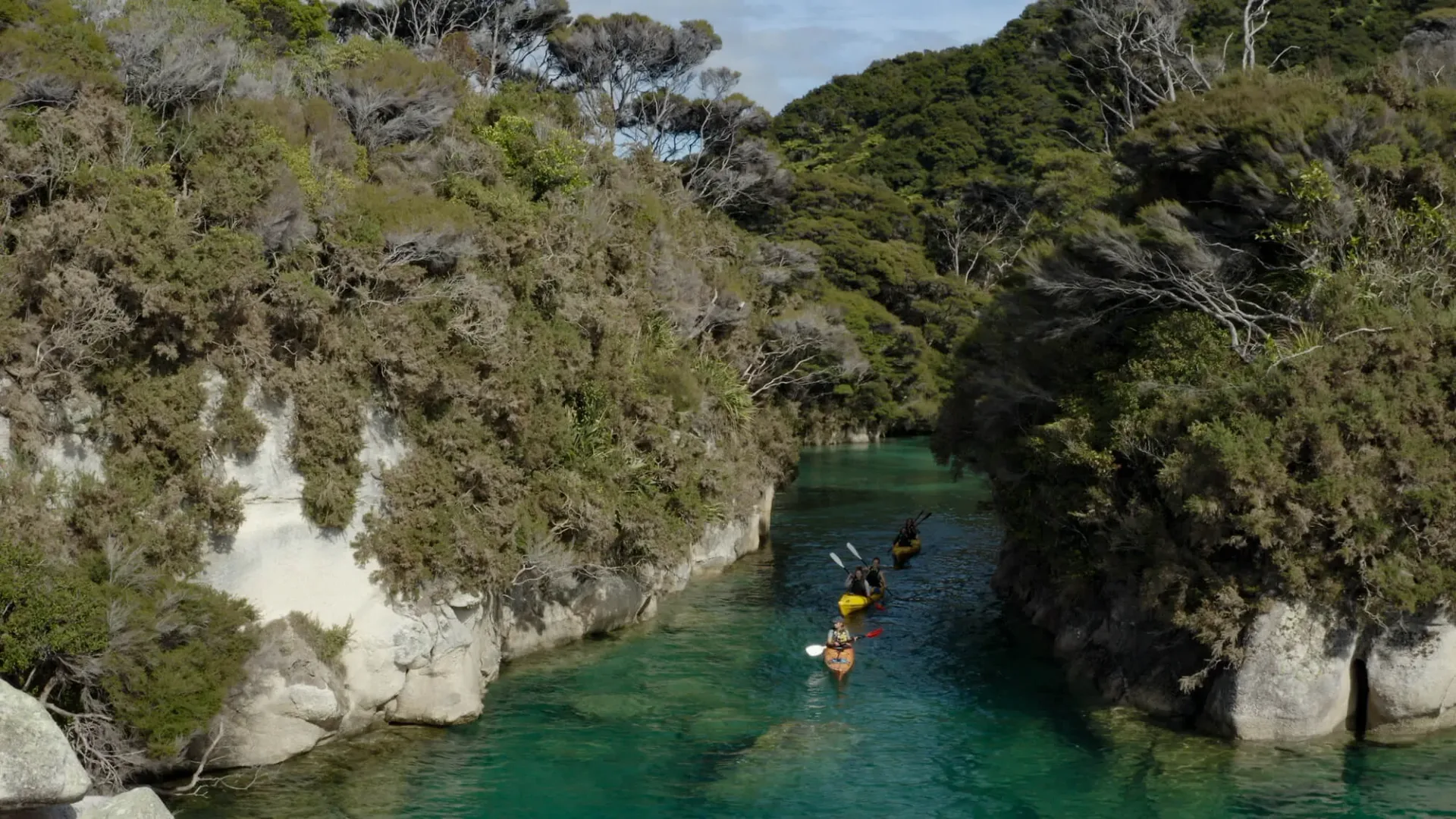
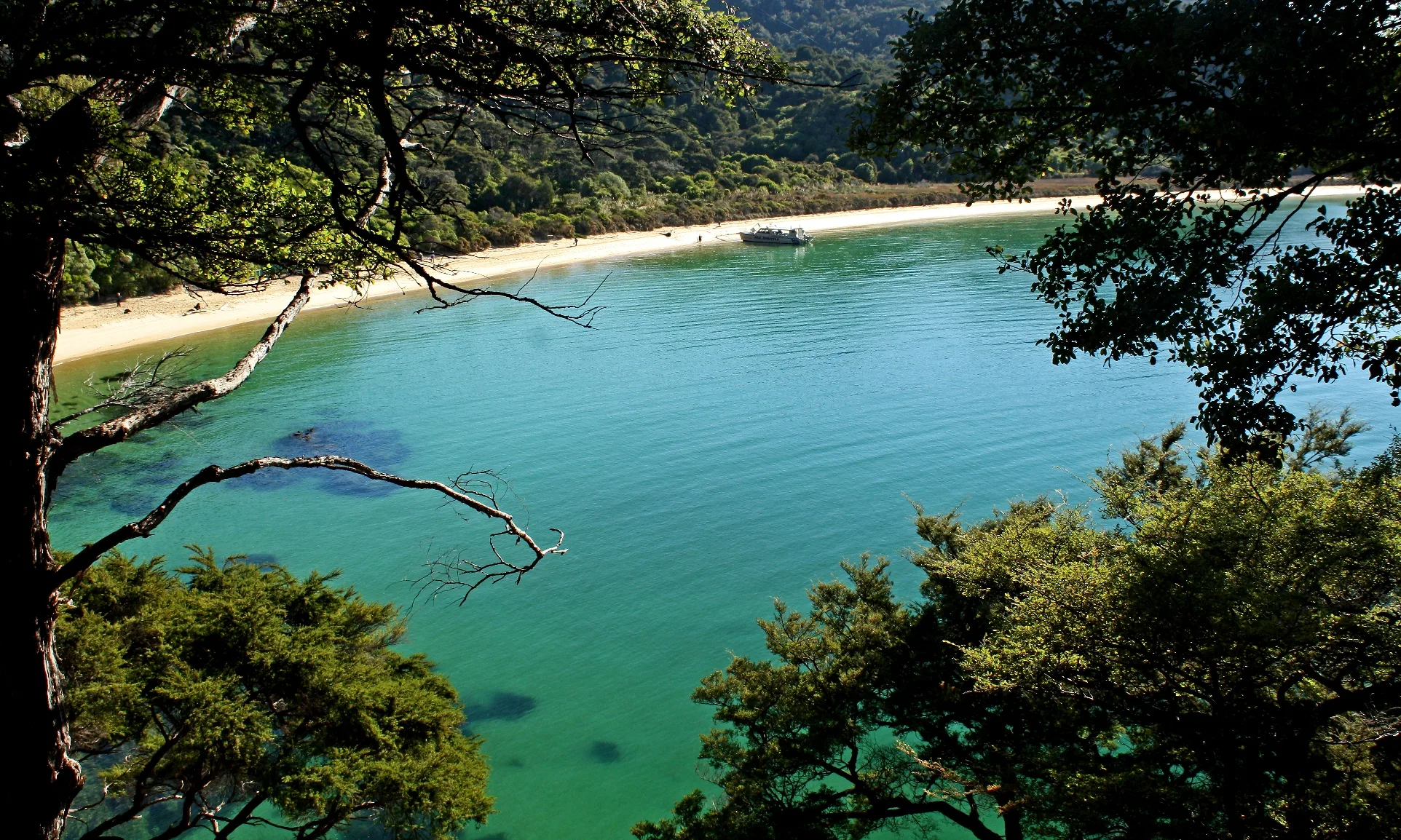
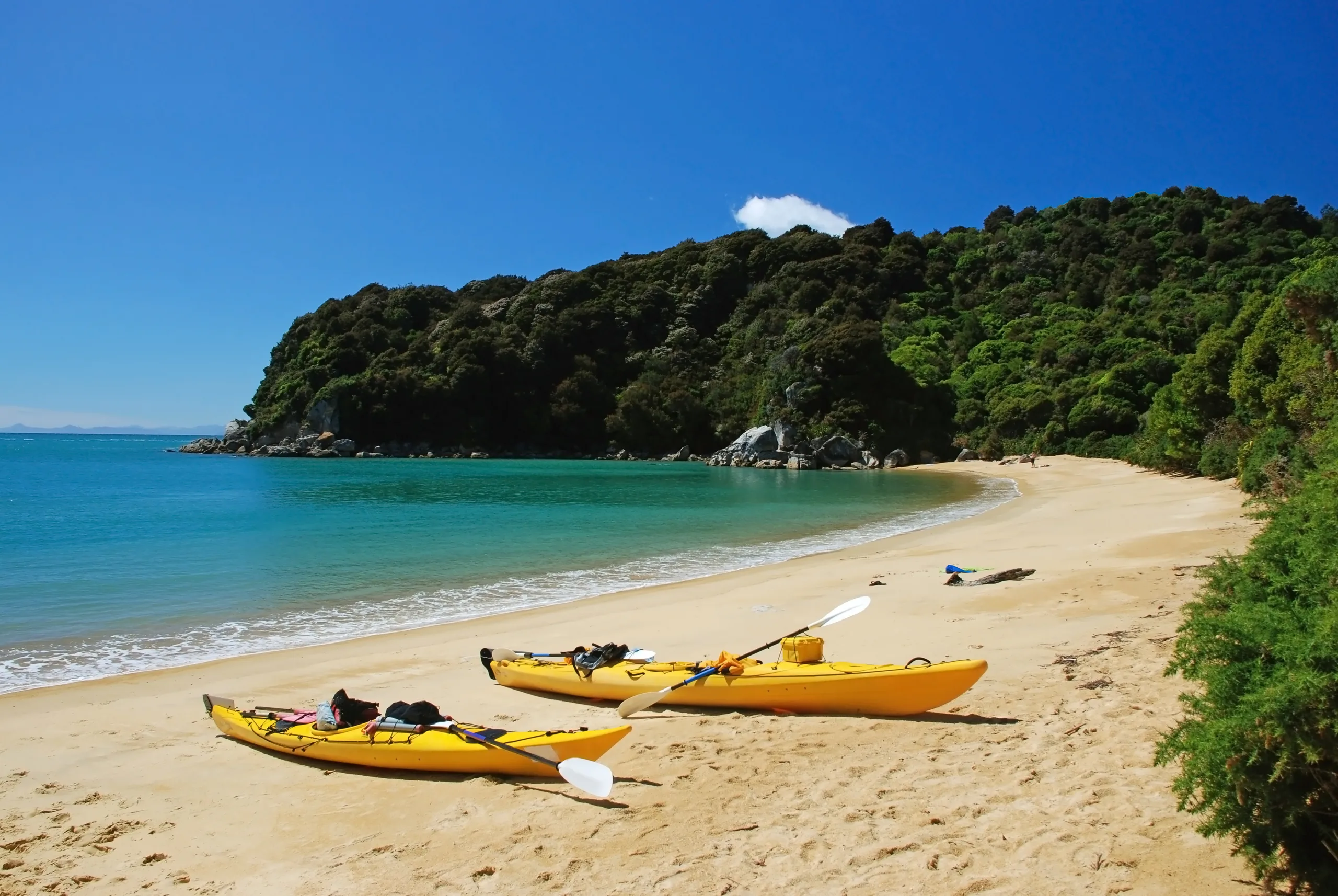
Granite shores, clear water and forest that reaches the sea.
The first people of this coast
Māori have lived along this coast for at least 500 years, gathering kai from the sea, estuaries and forest and growing kūmara in sheltered places. The signs are still here if you know where to look: around 14 hectares of Māori garden soils at Sandy Bay, kūmara storage pits along the coast, and six recorded pā sites. Most people lived here seasonally, though some sites at Awaroa were occupied year-round.
The tribal history is layered. Ngāi Tara were followed by Ngāti Tumatakokiri from the early 1600s, then by iwi of the Kurahaupō alliance around 1800. From 1828, Ngāti Rārua, Ngāti Tama and Te Ātiawa settled the area, and today these three iwi are kaitiaki (guardians) of the park.
Many places here carry official dual names, restored in 2014 through Treaty settlements: Separation Point / Te Matau, named for the fish-hook of Māui; Adele Island / Motuareronui; and Torrent Bay / Rākauroa among them.
In December 2025 the Crown agreed to transfer around 1,603 hectares of the park to Te Here-ā-Nuku Trust, following the long-running Stafford case over the Nelson “tenths” reserves. DOC will keep running the park and the Great Walk, and public access stays the same.
Explorers, settlers and a new national park
On 18 December 1642, the Dutch explorer Abel Tasman anchored in Golden Bay, the first European known to visit Aotearoa. A clash with Ngāti Tumatakokiri left four of his crew dead; he named the bay Moordenaers (Murderers) Bay and sailed on without landing.
In January 1827 the French explorer Jules Dumont d’Urville arrived in the Astrolabe. He named Separation Point, Astrolabe Roadstead after his ship and Adele Island after his wife, along with Observation Beach, Watering Cove and Coquille Bay. Paddle past Observation Beach and Watering Cove today and you’re travelling through his map.
Permanent European settlement began around 1855. Ships were built at Awaroa and Torrent Bay; the Huffam brothers stripped black beech bark for tanning, which is how Bark Bay got its name; and from 1904 the Tonga Bay Granite Company quarried stone at Tonga Quarry. Its granite went into Wellington’s Chief Post Office and Nelson’s Cawthron Steps, and abandoned blocks of it remain at the quarry today.
The park itself owes much to conservationist Perrine Moncrieff. She began campaigning in 1937 after hearing of plans to mill the forest at Tōtaranui, and in March 1942 the government agreed. The park was opened on 19 December 1942 by the Governor-General, Sir Cyril Newall, 300 years after Tasman’s visit. The ceremony was meant to happen at Torrent Bay but rough seas moved it to Kaiteriteri.
The park has grown over the decades, adding Tōtaranui, the islands, Separation Point and the coast to Wainui. In 2016 around 40,000 New Zealanders chipped in through crowdfunding to help buy Awaroa Beach, which was then added to the park for everyone to enjoy.
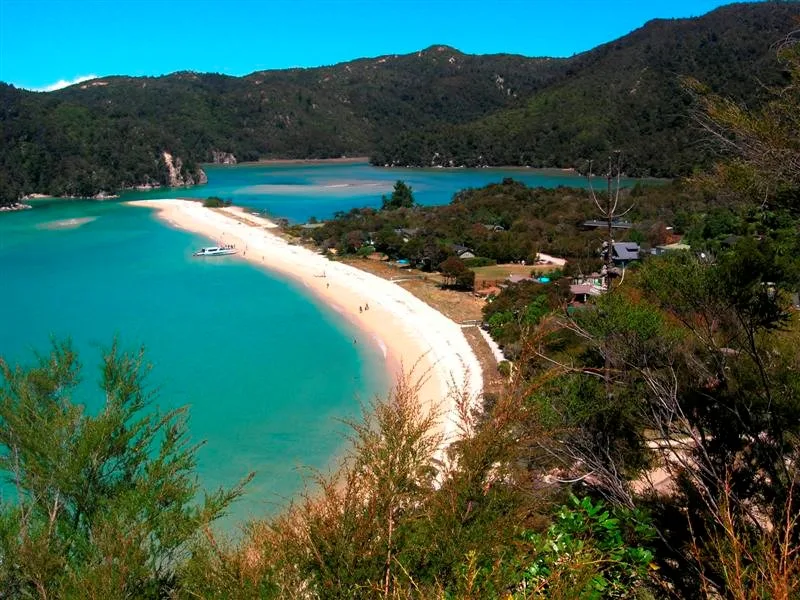
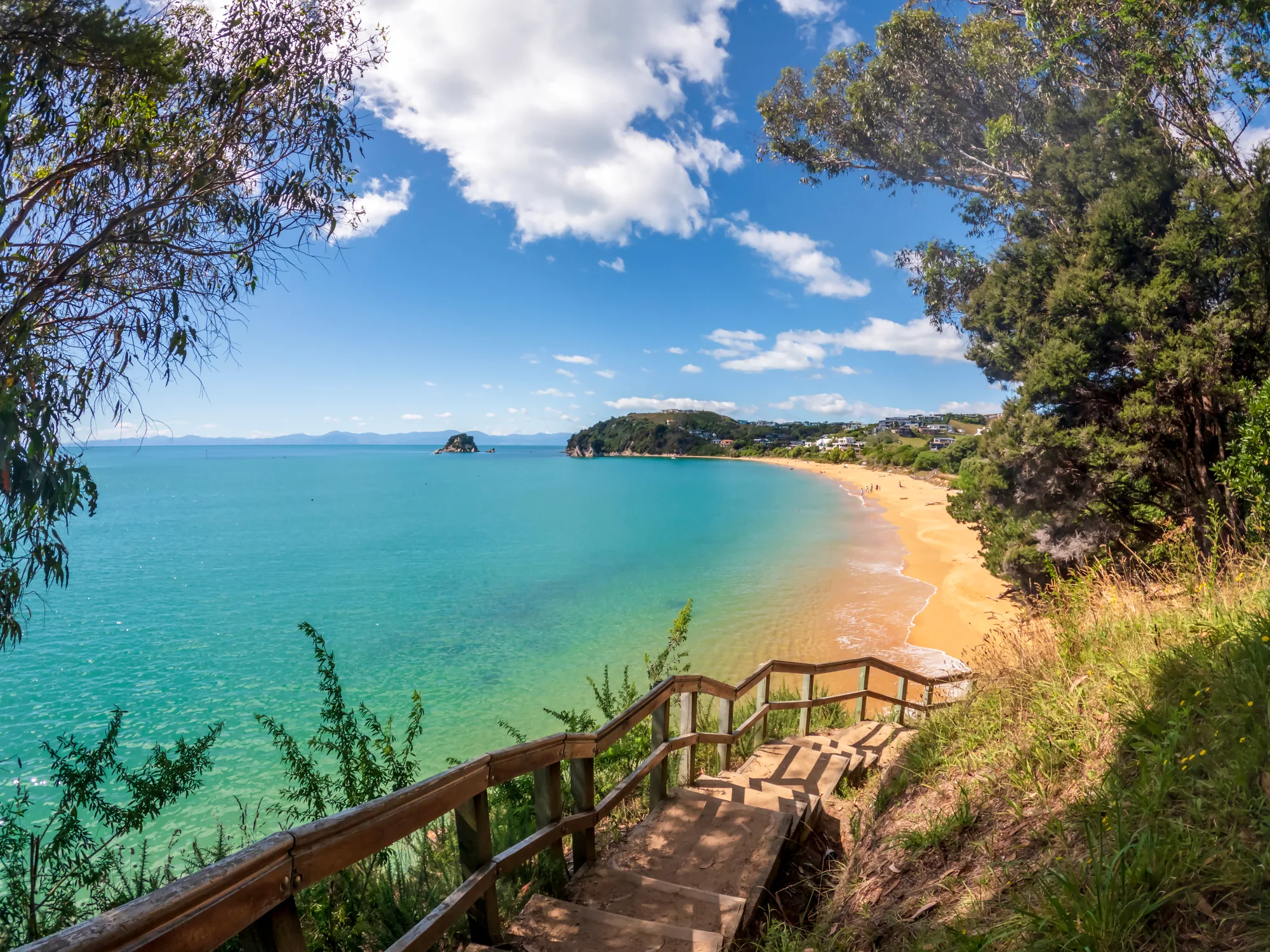
Torrent Bay / Rākauroa, where ships were once built on the beach.
Birds, seals and dolphins
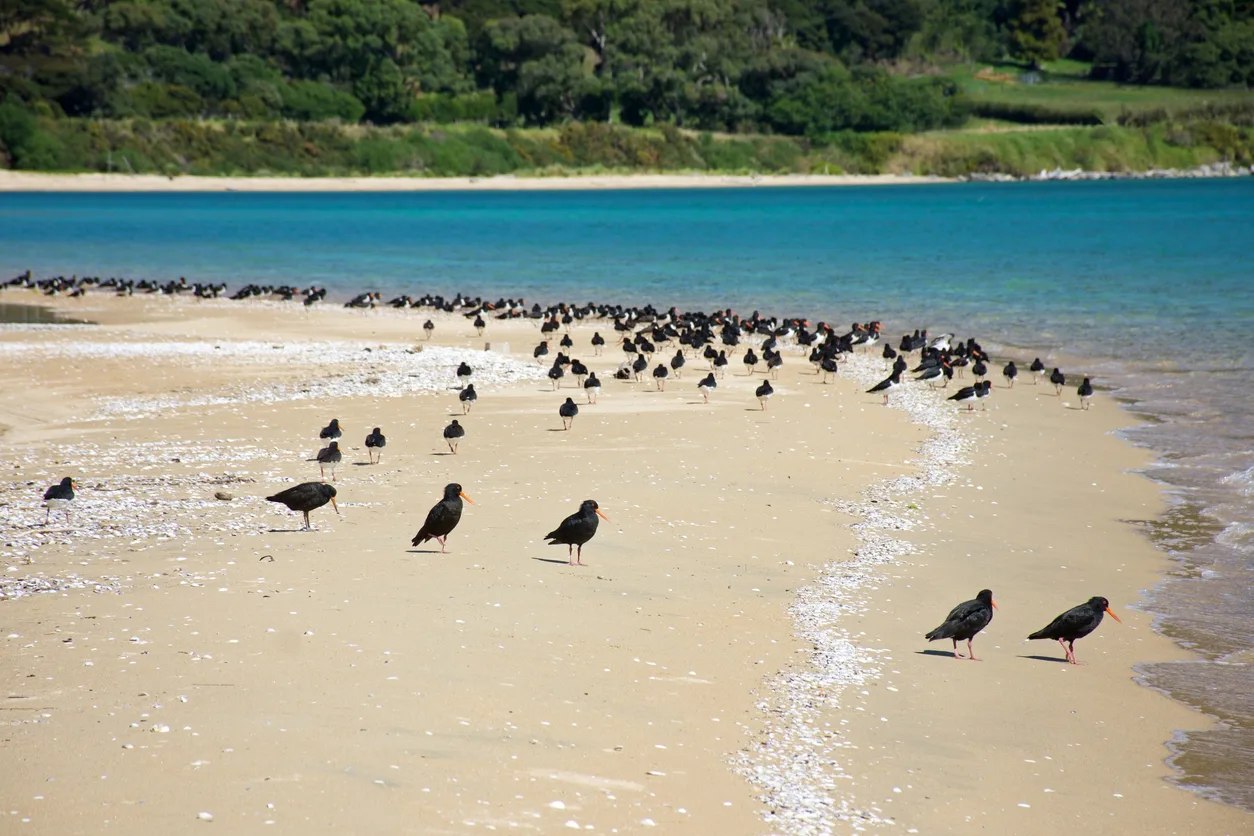
Walk or paddle quietly and you’ll hear the forest before you see it. Korimako (bellbirds), pīwakawaka (fantails), kererū and tūī are the most common forest birds. Along the shore look for gannets, shags and terns, and at night kororā, little penguins, return to their burrows on the islands.
The park’s birdlife has had a big helping hand. Over 14 years, from 2012 until it handed over its work on 30 June 2026, Project Janszoon worked with DOC, iwi and the Abel Tasman Birdsong Trust to clear wilding pines, control predators and return lost species. Kākāriki have been released since 2014, tīeke (saddleback) were moved to Motuareronui in 2014, kākā returned from 2015, and pāteke and whio have followed. Tonga, Adele and Fisherman islands are free of introduced mammal predators. DOC, mana whenua and the Birdsong Trust now carry the work on.
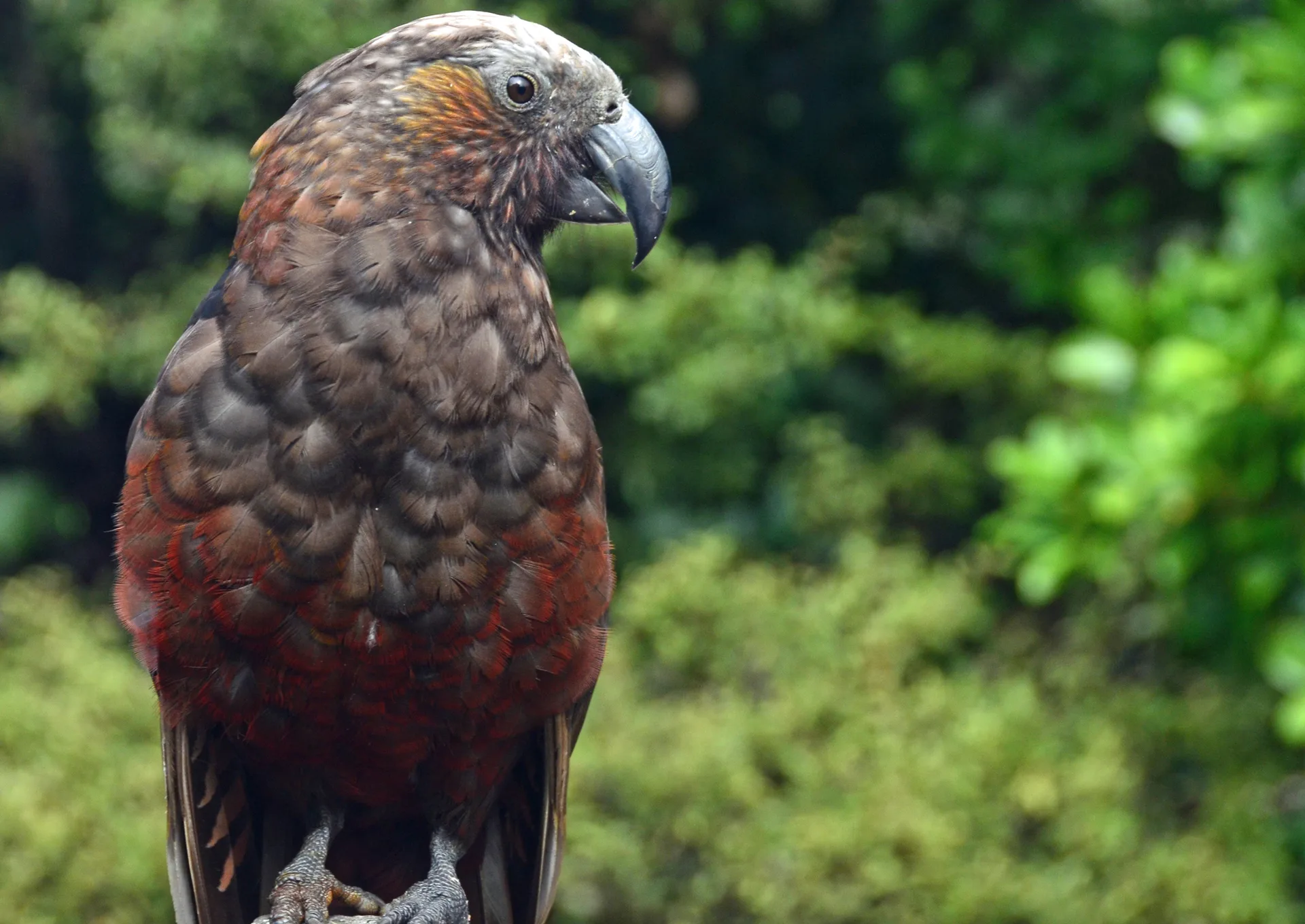
Kākā have been returned to the park since 2015.
Offshore, the Tonga Island Marine Reserve protects 1,835 hectares of sea, stretching one nautical mile out from the coast between Awaroa Head and the headland between Bark Bay and Mosquito Bay. It was established in 1993, and fishing or taking anything from it is illegal. Kekeno (fur seals) breed on its rocky shores from October to January, and bottlenose, Hector’s, common and dusky dolphins visit, with the occasional orca. Our Kahu Classic Marine Reserve trip takes you right into it.
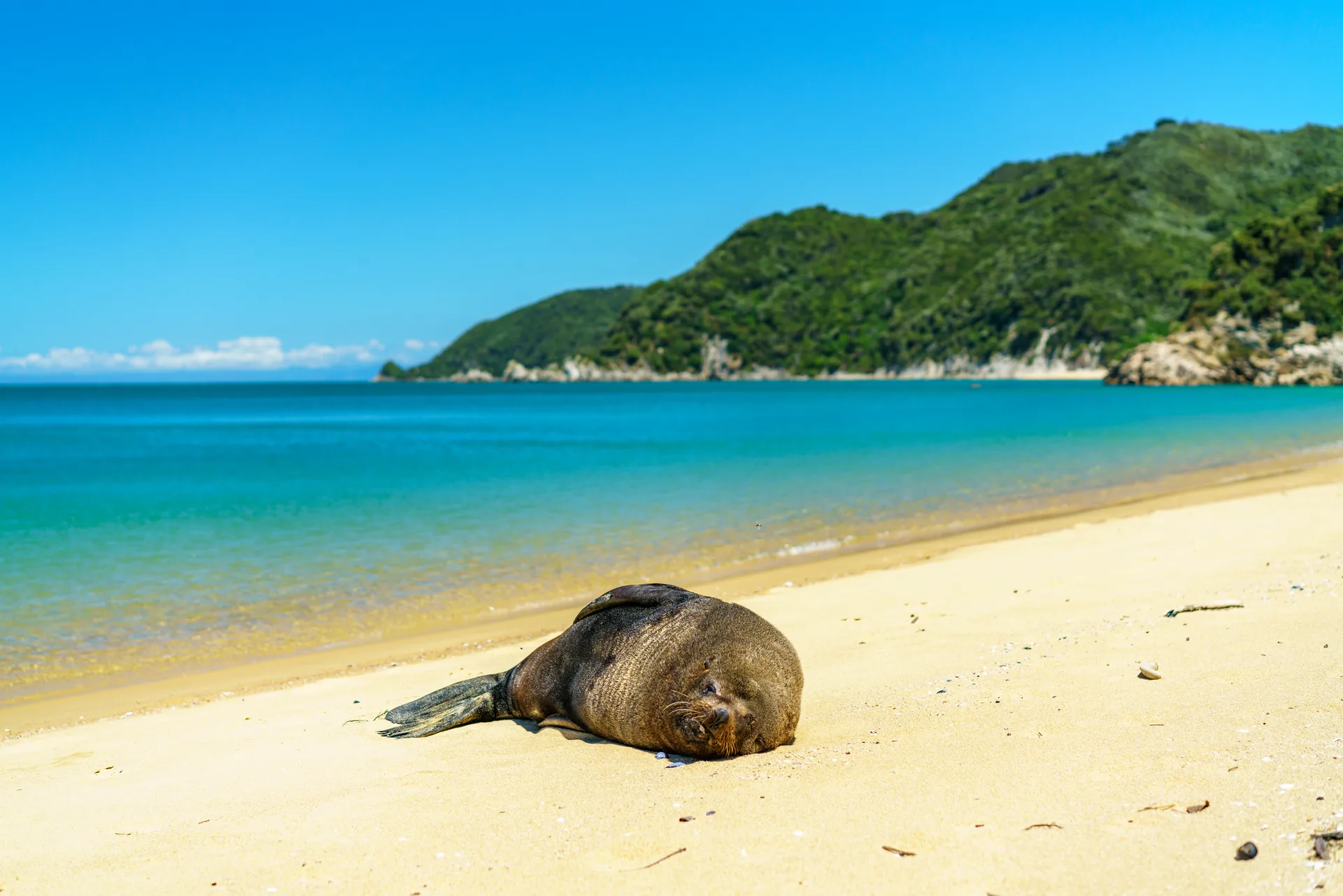
A kekeno (fur seal) taking it easy on the sand. Always give seals at least 20 metres.
When to visit
The park is open all year. It’s busiest from October to April, when long sunny days make it perfect for swimming and paddling, though late spring and summer can also bring strong westerly winds. Autumn and winter are generally calmer, with fewer insects and quieter beaches, but cooler temperatures and shorter days.
The region enjoys around 2,200 hours of sunshine a year. At Tōtaranui, January brings average highs of 23°C, and July around 13°C.
Ways to explore
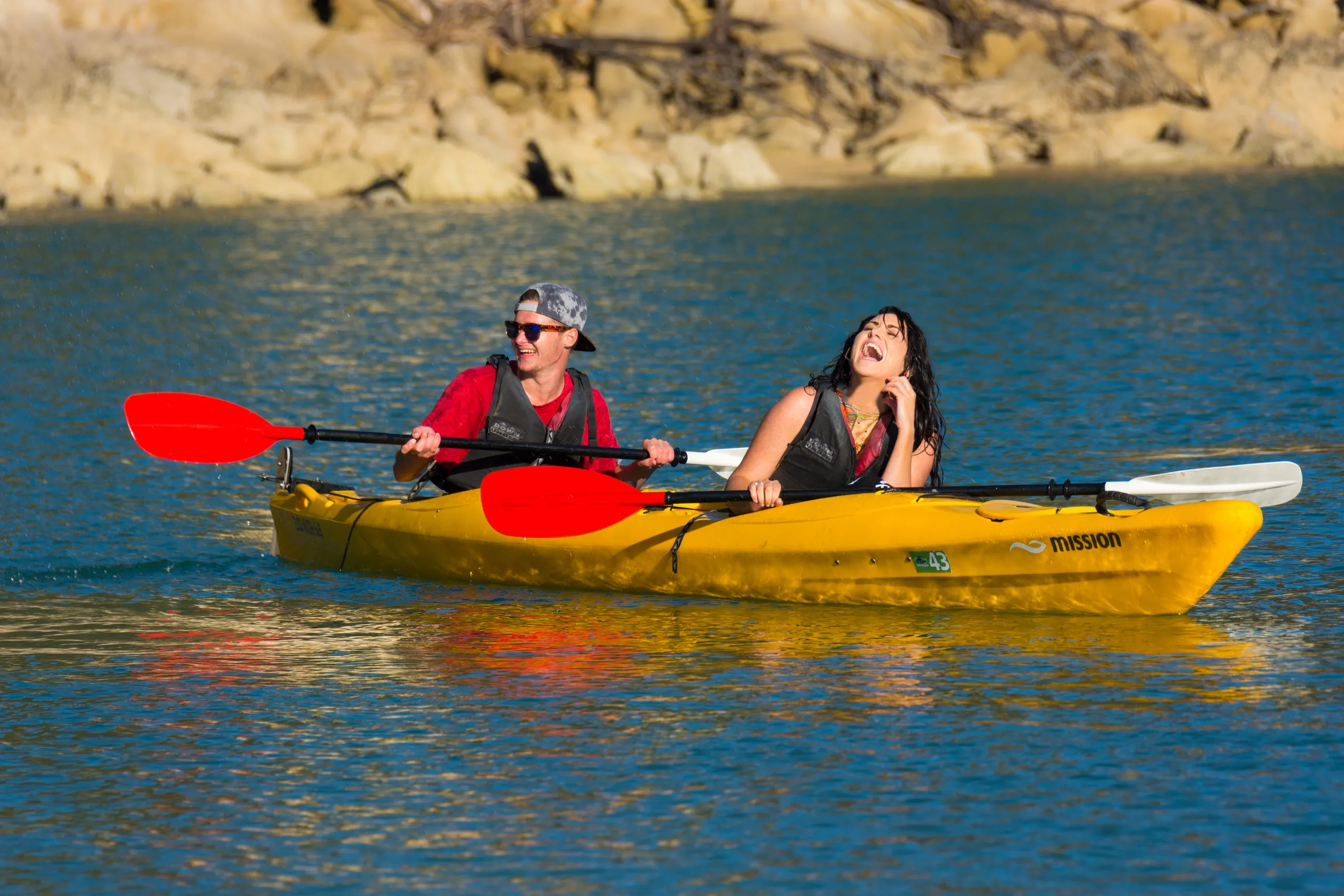
- By kayak. Paddling is the best way to reach the coves, islands and seal colonies. DOC recommends guided trips for beginners; independent hire needs at least two people and some sea-kayaking experience. See our guided tours and freedom kayaking.
- On foot. The Abel Tasman Coast Track runs 60 km from Mārahau to Wainui. The Inland Track is a steeper, rougher alternative over the hills, and the short Wainui Falls Track leads to a waterfall near the park’s northern end.
- By water taxi. Water taxis run from Mārahau and Kaiteriteri to beaches as far north as Tōtaranui, so you can mix walking, paddling and riding.
- To the islands. Adele Island / Motuareronui and Fisherman Island can be reached by kayak, but there are no toilets and camping isn’t allowed. Tonga and Pinnacle islands need a permit to land because of their seal colonies.
- Overnight. DOC huts and campsites along the coast must be booked all year. Our guide to campsites and huts will help you plan.
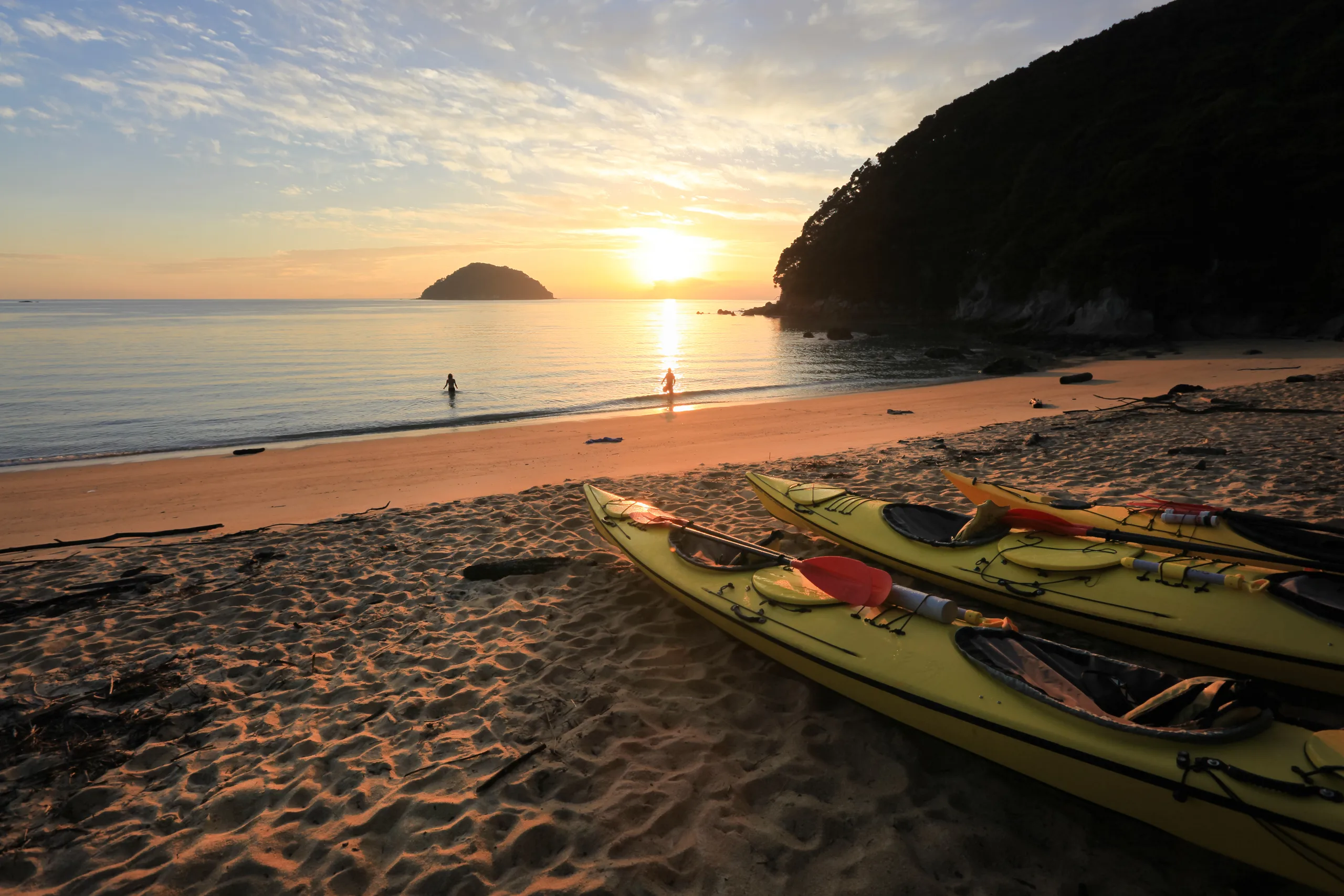
An early start is worth it on a calm summer morning.
Caring for the park
A few simple rules keep the Abel Tasman beautiful for everyone, people and wildlife alike:
- No dogs anywhere in the park, including the islands.
- Drones need a DOC permit, and permits are rarely granted.
- Fires are only allowed in designated fireplaces, and DOC may impose a total fire ban.
- Camp only where you’ve booked, in a tent (no hammocks).
- Take everything home. There are no rubbish bins in the park.
- Leave the marine reserve as you found it. No fishing, and don’t take or disturb anything.
- Give seals space. Stay at least 20 metres away, especially during the breeding season.
- Check your gear for pests, including inside your kayak, before you land on the islands.
Conditions and rules can change, so check DOC’s Abel Tasman National Park page before you visit.
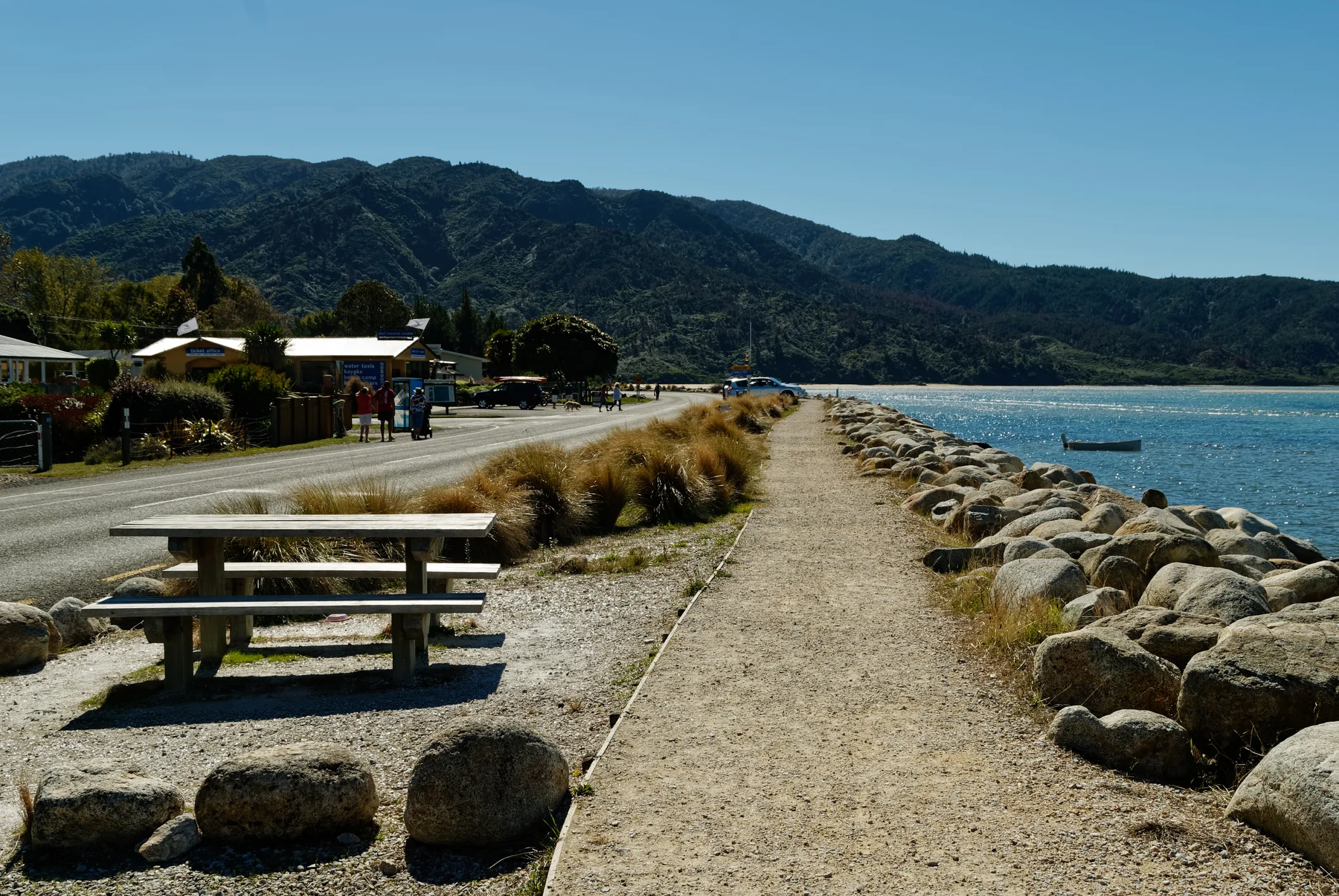
However you choose to explore, we’d love to help. Drop into our base in Mārahau, at the southern gateway to the park, and we’ll help you find your own favourite corner of it.